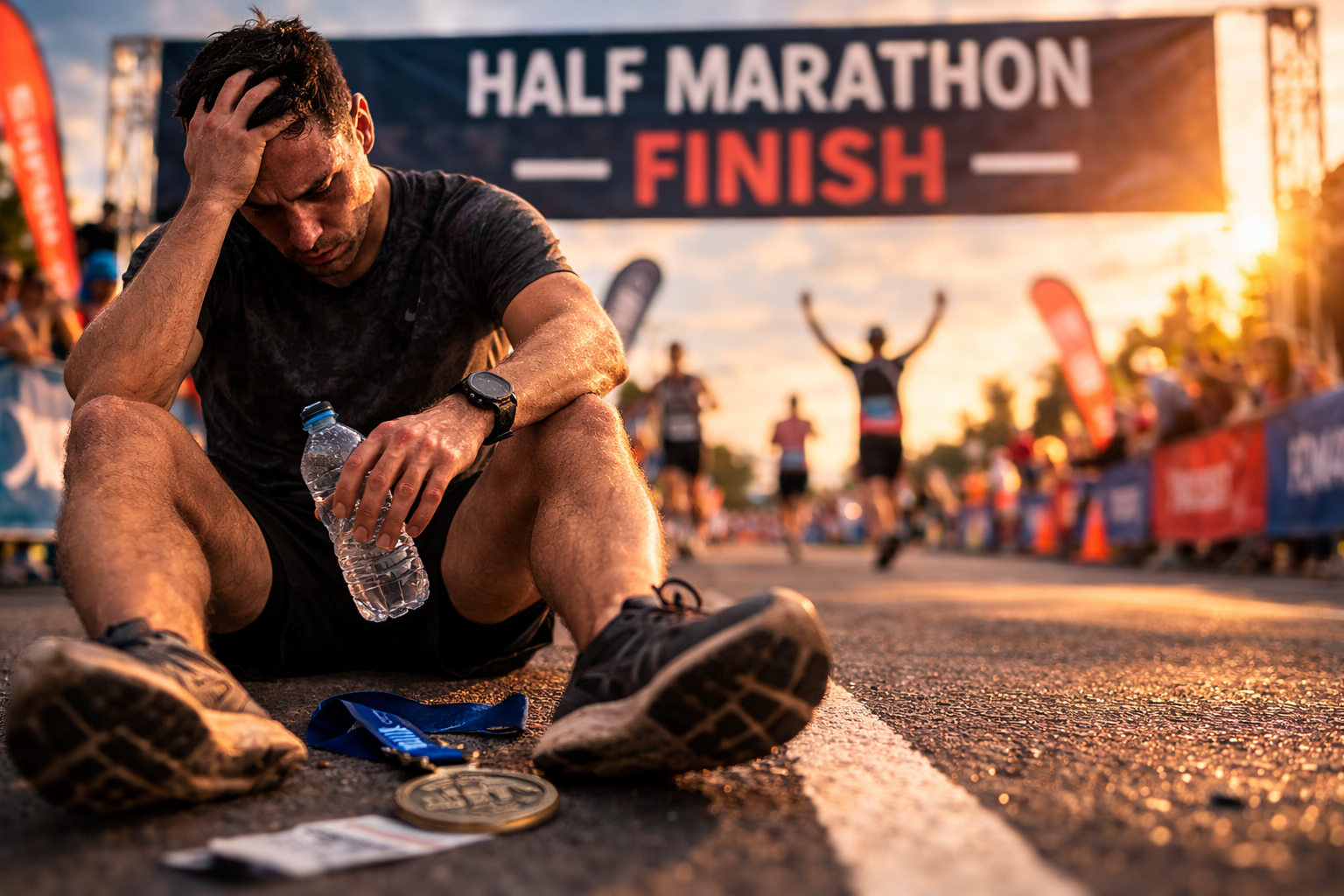
Can You Run a Half Marathon Without Training?
Published: March 9, 2026

Every year it happens.
Someone signs up for a half marathon with the best intentions. Maybe it’s a New Year’s resolution, a charity event, or a challenge from a friend. At the time it feels like there’s plenty of time to train.
Then life gets busy.
Work, family, stress, bad weather… and suddenly race day is only a few weeks away.
Now the big question pops up:
Can you run 21.1 km without training?
The honest answer is yes — many people do it. But finishing and enjoying it are two very different experiences.
Let’s talk about what actually happens when you attempt a half marathon without preparation.
The First Half Feels Easier Than You Expect
One of the biggest traps runners fall into is how good the first few kilometres feel.
Race day energy is real. The crowd, the atmosphere, and fresh legs can carry you further than you expect. The first 5–8 km often feels comfortable, even for someone who hasn’t trained properly.
But then the reality of the distance starts showing up.
Around 9–11 km, fatigue usually kicks in. Your calves start tightening, your hips feel heavier, and your stride becomes less efficient.
By 13–16 km, things get much harder. Energy levels drop, small hills suddenly feel massive, and the constant impact from running begins to take its toll.
This is where many runners start alternating between running and walking.
The Most Common Problems Untrained Runners Face
Trying to push through 21 km without preparation puts a lot of stress on your body.
Some of the most common issues include:
- Blisters forming halfway through the race
- Tight calves or hamstrings that lead to cramps
- Knee or IT band pain when your running form breaks down
- Severe muscle soreness the next day
Most runners who attempt it will still reach the finish line, but the recovery afterwards can be rough.
It’s very common for soreness to peak 24–48 hours later, and some runners feel the effects for nearly a week.
Who Can Sometimes Get Away With It
If someone already has a strong endurance background, they may cope better.
Cyclists, hikers, swimmers, or rowers often have the cardiovascular fitness to keep moving for a long time. But running is different because of the repeated impact on your legs.
Even very fit athletes from other sports often find themselves walking large parts of the second half.
What a Realistic Finish Time Looks Like
If you’re attempting a half marathon with very little training, a realistic goal is simply to finish.
Most untrained runners complete the distance somewhere between 3 and 3½ hours. That usually means a combination of jogging and walking to manage the effort.
And that’s perfectly fine.
The goal on that day should be to keep moving forward.
If You’re Already Signed Up — Here’s How to Survive the Race
If race day is close and the training didn’t happen, don’t panic. There are still ways to make the experience more manageable.
- Start slower than you think you should. The biggest mistake runners make is going out too fast because they feel good early on.
- Use walk breaks early. Don’t wait until you’re exhausted. Walking through water stations or every kilometre can help control your breathing and conserve energy.
- Fuel early and regularly. Take something small around 6–8 km and continue eating small amounts during the race. Drink water at each station.
- Don’t try anything new. Race day is not the time to test new shoes, socks, or clothing.
After about 13 km, the race often becomes more mental than physical. Focus on staying relaxed, keeping good posture, and maintaining a steady rhythm.
Listen to Your Body
While discomfort is normal during long races, some warning signs should never be ignored.
Stop or slow down if you experience:
- dizziness
- chest pain or tightness
- sharp pain
- confusion or blurred vision
- chills despite warm weather
If any of these happen, move off the course and seek help from medical staff.
What Happens After the Race
The next few days are when most untrained runners really feel the effort.
Muscle soreness usually peaks one or two days after the race. Light movement, good sleep, and proper nutrition will help your body recover.
Easy walking or cycling can help loosen stiff muscles, but it’s best to wait until soreness fades before running again.
Is Running It Without Training Worth It?
You can absolutely finish a half marathon on determination alone.
But it’s rarely the experience people hope for.
With even 8–12 weeks of consistent training, the race feels completely different. Instead of just surviving the distance, you actually enjoy the run and finish strong.
How Long It Really Takes to Prepare
The time needed depends on your current fitness level.
A rough guideline looks like this:
- Beginners starting from scratch: 14–16 weeks
- Runners who can already run 5 km: 10–12 weeks
- Runners with a solid base: 8–10 weeks
Training isn’t only about improving fitness. It also strengthens your muscles, joints, and tendons so they can handle the distance safely.
The Bottom Line
Running a half marathon without training is possible.
But for most people, it turns into a long and painful day followed by several days of recovery.
With the right preparation, that same race can become one of the most rewarding experiences in running.
And that’s the difference good training makes.