Front Foot vs Mid Foot vs Heel Strike — Which Is Best?
Published: October 24, 2025
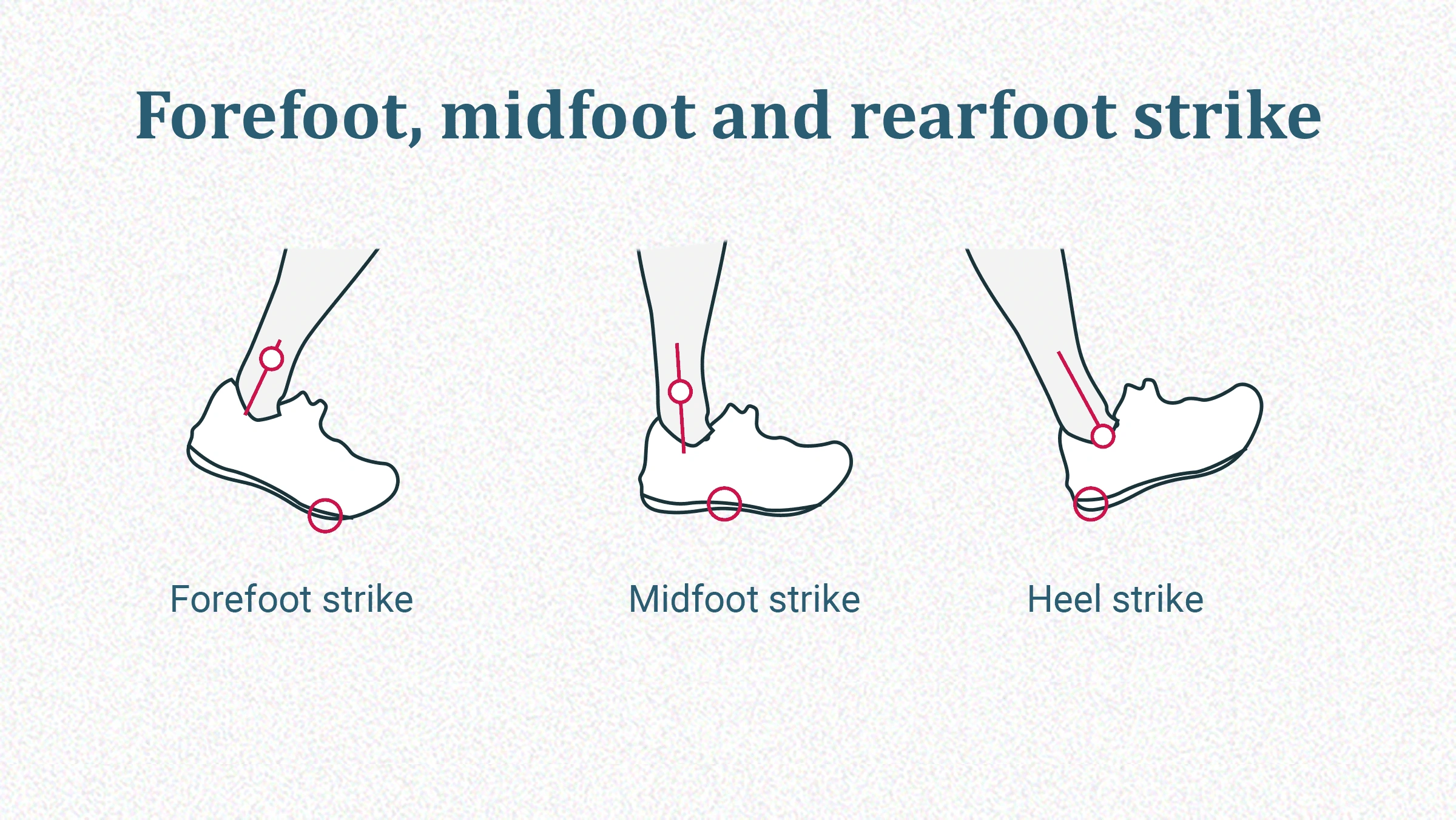
When your foot hits the ground while running, how it lands plays a big role in efficiency, comfort, and injury prevention. There are three main types of foot strikes — heel, midfoot, and forefoot — each with its own pros and cons. Understanding these can help you find your most natural and efficient running style.
1. Heel Strike (Rearfoot)
Your heel lands first, followed by the midfoot and toes. This is the most common pattern among recreational runners.
- Pros: Feels natural, absorbs impact through cushioned shoes, easier on calves and Achilles.
- Cons: Can create a braking effect, increasing stress on knees and hips, and less efficient at faster speeds.
2. Midfoot Strike
The heel and ball of the foot land almost at the same time, spreading impact evenly.
- Pros: Balanced load distribution, smoother transition, promotes better posture and cadence.
- Cons: Requires stronger calves and may feel odd at first if you’ve been a heel striker for years.
3. Forefoot Strike (Front Foot)
The ball of your foot lands first — the heel may not touch the ground at all. Common among sprinters and minimalist runners.
- Pros: Faster turnover, less impact on knees and hips, strengthens calves and feet.
- Cons: High strain on calves and Achilles, inefficient for long runs, can cause fatigue if overdone.
So, which is best?
There’s no single “perfect” strike. The ideal one depends on your goals, pace, and natural movement:
- Sprinting or speed work: Forefoot strike.
- Mid- to long-distance efficiency: Midfoot strike.
- Easy or beginner running: Heel or midfoot strike.
In short, if you’re running pain-free — don’t force a change. But if you experience knee discomfort, try shifting toward a midfoot strike; if your calves ache often, stay closer to a heel or midfoot pattern.